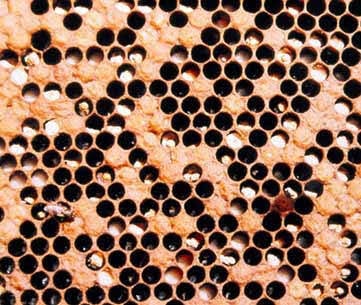
chalkbrood in a honeybee colony involves looking for hard, mummified larvae that resemble small white, grey, or black pieces of chalk or tiny marshmallows inside the brood cells, on the hive floor, or outside the entrance. It is a common fungal disease caused by Ascosphaera apis that typically affects stressed or damp colonies.
Visual Signs and Identification
- Mummified Larva: Hard, shrunken bodies that rattle inside the comb if shaken or resemble small pieces of chalk or white marshmallow.
- Color Changes: Mummies start bright white and cottony, sometimes turning yellowish, then darkening to grey or black as fungal spores mature.
- Spotty Brood Pattern: Irregular or patchy capped brood left behind as nurse bees uncap and clean out infected cells.
- Hive Debris: Piles of discarded mummies accumulating on the bottom mesh, landing board, or ground right outside the entrance.
Causes and Management
- Triggers: High humidity, poor hive ventilation, cold weather, or a colony size too small to properly cover the brood nest.
- Action Steps: Reduce excess hive space for weak colonies, improve ventilation or move the hive to a sunny location, and replace old, spore-heavy comb.
- Requeening: If an infestation is heavy and persistent across seasons, replace the queen with stock known for hygienic, fungus-tolerant genetics.